
Craig Peterson - VP Sales-Credit UnionsVP Sales
Credit union members will be ramping up holiday spending, and will likely use buy now pay later (BNPL) to finance their purchases, 11% more than last year according to Adobe Analytics.
CUs have until recently had very little insight into these obligations: because BNPL doesn’t affect your credit score, credit bureaus can’t tell you anything about it.
BNPL is nearly ubiquitous these days, leaving a serious blind spot for CUs that want to help their members responsibly.
It’s not a trivial issue: EDGE client data shows that as the number of loans a borrower takes on, they are also likely to have more BNPL loans. In addition, as borrowers pay off one BNPL purchase, they are very likely to make another, essentially using BNPL as a revolving line of credit.
The good news is that EDGE and our bank transaction data can give lenders the insights they need. EDGE gives a real-time view of borrowers’ income and transaction history, and thus the number and amount of BNPL payments they are responsible for.
Unlike traditional credit bureau data, bank transaction data gives a full – and current – picture of members’ financial health. With this insight, CUs can help members in a number of new ways: risk assessment when underwriting new loans, in servicing existing loads with a full view of members’ finances, or even in offering lower-interest loans to replace high-interest BNPL payments.
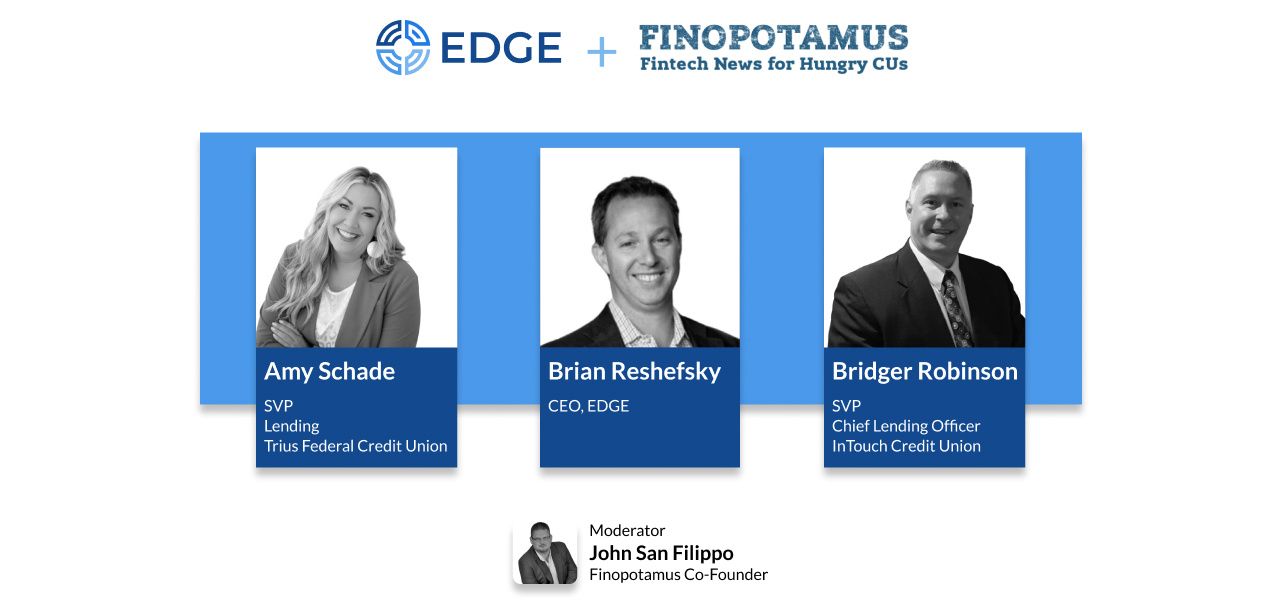
Learn how credit unions are facing this BNPL challenge today in our upcoming online panel discussion, where EDGE’s Brian Reshefsky joined by two senior lending officers and Finopotomus’ co-founder to discuss current trends for credit unions: https://hubs.la/Q02YdHh70